Friday, October 15, 2021

October 15, 2021


Love this Boss's day card! Thanks for the thoughtful cards and gifts :)


No matter how many times a student tells you they don’t care about school or whether they succeed, remember that no child wants to be a failure. Some will try and convince you otherwise, but it is in those moments that they need you most. Believe in all kids and believe in your own ability to influence them. 

  • Students still struggle asking for help when they are failing

  • Knowing which students are struggling reach out to them and make an appointment with them during class time instead of waiting for them to make an appointment- this was a suggestion from a student

  • Students feel overwhelmed with too much busy work

  • Send feedback surveys to students and see what they have to say


NO EXCUSES UNIVERSITY – INTERVENTIONS

Culture of Universal Achievement
Collaboration
Standards Alignment
Assessment Plan
Data Analysis
Interventions
“Once children are taught what they need to learn and then assessed for their levels of proficiency, there needs to be appropriate, data-driven academic interventions to help students who are not on track to be proficient by the end of the year.  There also needs to be similar social interventions, because children who are emotionally well adjusted are much more likely to be academically successful.”
During our Academic Conferences at our staff meeting we discussed interventions for our students.  In reviewing the data, we have moved past the excuses and how we can help them at school :)
When we review data, we focus on what the students don’t know and how we are going to provide interventions to support the students learning.
We have now completed MAP assessments or formal/informal data you are collecting.  What are you doing with the data?  What interventions have you put in place?  Here is an example:
If your student scores have low RIT score.   You are able to drill down into the results to determine on which standards the students need support in.  As an example in Math, when one drills down further into the data,  you may notice that the majority of the students struggled with expressions and equations.  A smaller number also struggled with use functions to model relationships. Then the teacher is able to develop very targeted lessons that can be delivered in a small group setting.  The teacher does not have to re-teach the entire class.  Targeted, immediate intervention will have a positive impact on student achievement.


Observable Fish Moments at SV:
Be There: Thank you for taking the time and building relationships with your students.
Play: Thank you Heather M. for offering another fun virtual cooking class.
Choose your attitude: BE POSITIVE!!!
Make Their Day:   Thank you for the cards and gifts for Boss's day!


Friday, October 8, 2021

October 8, 2021

 NO EXCUSES UNIVERSITY – DATA ANALYSIS

Culture of Universal Achievement
Collaboration
Standards Alignment
Assessment Plan
Data Analysis
Interventions
“It is one thing to have a sophisticated system of regular, formative assessments, but if that assessment data is not collected, disaggregated and reported in a timely and user-friendly manner, it becomes almost unusable.  We believe data must be easily accessible, openly shared, and deliberately arranged.”
There are three main components to data management:
#11. Easily accessible
#  2. Openly shared
#  3. Deliberately arranged
Easily accessible:  We are so fortunate to have two data systems that provide us with on-the-spot data about our students, our schools, and our district.  If you have not become proficient on MAP, you are missing out on valuable tools that will help guide your conversations and actions.  The best part of MAP and Illuminate is that both systems are accessible to our staff.
Openly shared:  During our collaborative time with grade levels, we have shared multiple data sets that include district and site-level academic achievement.  We should currently be working with our school’s formative (or MAP) data and providing intervention now.  
Deliberately arranged:  Over the last few weeks, we have been hearing lots of thoughts about student achievement – reasons for increases or decreases.  One of our commitments is to be specific when we talk about student achievement.  Student achievement data is readily available and we need to use it to describe academic progress.  Furthermore, as you look to each data set, make certain you drill down to the student level.  Don’t just look at the data from the 30,000 foot view.  Remember…data doesn’t always answer questions.  More often than not, it raises questions. AND DATA BELONGS TO THE STUDENT!

Observable Fish Moments at SV:
Be There: Thank you for those staff members who have been able to attend our after school games!
Play: Thank you Heather M., Daniel and Kristin for helping out with Fun Friday!
Choose your attitude: BE POSITIVE!!!
Make Their Day:   Check in with a staff member you have not talked to in awhile.

Friday, October 1, 2021

October 1, 2021


NO EXCUSES UNIVERSITY

Culture of Universal Achievement
Collaboration
Standards Alignment
Assessment Plan
Data Analysis
Interventions
“We spend time at our Institute distinguishing between formative and summative assessments and how grade level teams can take responsibility for gathering or creating formative assessments that make sense for them.  We emphasize the importance of this work as a support to teachers, because this allows teachers to track those students who are not making adequate academic progress towards proficiency, and then identify specific content areas that require intervention.”
There are some key topics to consider when implementing an assessment plan:
#1:  Assessment is NOT about the teacher, it’s about the student
#2:  Balance between of and for learning assessments
#3:  Scheduling, benchmarks for growth, and continuous improvement are crucial
Assessment is NOT about the teacher, it’s about the student:  One of my favorite quotes from the summer institute was that data does not belong to the teachers.  It was on loan from the students.  In order to help students achieve proficiency, we must support the teacher in analyzing the data and making the necessary adjustments.

Balance between of and for learning assessments:  There needs to be a balance between formative and summative assessments.  Think about the teachers on your campus.  What percentage of the instructional time is dedicated to formative assessment?  What percentage of the instructional time is dedicated to summative assessment?  In a NEU school, both assessments are equally important.
Scheduling, benchmarks, and continuous improvement are crucial:  When you get your data…what do you do about it?  Is it used as a learning opportunity to better understand what your students know and don’t know? Everything we do should be about providing opportunities for continuous improvement.  Do we have systems in place that allow for such a process?

Observable Fish Moments at SV:

Be There: Thank you Daniel for taking on extra coaching duties so that our students can participate in middle school sports.
Play:  Thank you Heather M. for coming up with Fun Friday for 7th-8th graders.
 Choose your attitude: BE POSITIVE!!!
Make Their Day:  Go out of your way and make a connection with a student that you don't know very well in your class.

Friday, September 24, 2021

September 24, 2021


Congratulations to Monica, Cecily and Janice's daughter!! 

NO EXCUSES UNIVERSITY – STANDARDS ALIGNMENT

Culture of Universal Achievement
Collaboration
Standards Alignment
Assessment Plan
Data Analysis
Interventions

When a school embraces a system of Standards Alignment, there are three attributes that need to be included.  As identified in the No Excuses University Schools Institute, the attributes are:
#1:  Aligning standards is not something that you’ve done, it’s something that you do.
#2:  Collaboration is key.
#3:  It must be practiced!  Skills – assessments – instructional methods – resources.

Now…before you move on, think about it.  Does our staff think of “Standards Alignment” as something that is “done” when the pacing guide is complete?  Or…does our staff think of “Standards Alignment” as an ongoing process and has strategies to measure how well every lesson is aligned to what the students need to learn?

Skills – assessment - instructional methods - resources:  Notice that the third attribute is not “Pacing Guide.”  The pacing guides document the skills, but it is just the first step in alignment.  You have to have systems in place to assess the student learning, a focus on the instructional methods that ensure rigor, and allocate the resources to support the students in achieving proficiency. 

Collaboration is key:  Do you plan for collaboration or does it just happen?  True collaboration includes bringing in data (not perceptions or hearsay) and making decisions based on the collected information.  Such a process has to be planned so that the proper data can be collected and is the foundation for good decisions.


If you don’t collaborate around your students’ academic achievement data, then how do you know if you have alignment?

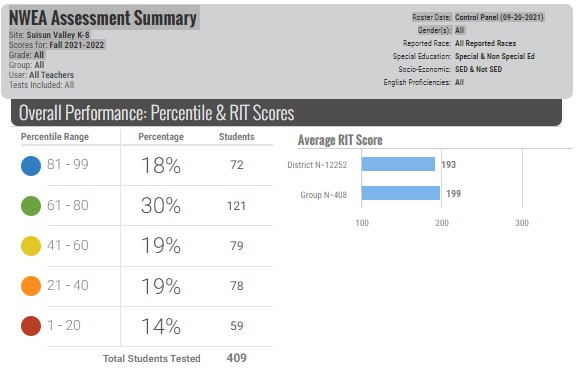
From our School Site Plan and looking at our data we have decided to focus on math. Specifically our EL, SPED, and SED students. Please look at our school site data below and then compare it to your class. What do you notice?
All students:

SPED students:


EL students:
SED students:
Progress Reports are due to me today. Here is a guide on how you can share them with me. Click Here


Character Trait for October is Caring click HERE for lesson plan ideas
Please remember we are ALL teaching a 10 minute lesson on Caring everyday.
Please read the link below on what we have committed to do as a staff

Observable Fish Moments at SV:
Be There: Thank you to our yard duty staff, Daniel, and Heather M. for helping out during lunch recesses. Thank you Kristi and Krista for keeping our lunch lines moving!
Play: What is one fun thing you can do with your students that does not involve academics?
Choose your attitude: BE POSITIVE!!!
Make Their Day:   Thank you Fern, Melody, Garrett, and Monica for running our IEP meetings efficiently.

Friday, September 17, 2021

September 17, 2021


No Excuses University – Collaboration

Culture of Universal Achievement
Collaboration
Standards Alignment
Assessment Plan
Data Analysis
Interventions
“This is the first and most important system that needs to be developed. Once a clearly understood and agreed-to system for collaboration is in place, a staff is equipped to develop the remaining essential systems and address any other learning challenges they encounter.”

When a school embraces a system of collaboration, there are four attributes that need to be included. As identified at the Turn Around Schools Institute, the attributes are:
#1: Based on action oriented commitments
#2: Scheduled well in advance
#3: Driven by professional attitudes
#4: Focused on results
Now…before you move on, re-read the four statements and think about if they represent the collaboration that takes place on our campus.
Based on action oriented commitmentsWhen our teams come together to collaborate, do you leave with “we talked about…” statements or are there actions that are going to be immediately implemented to impact student learning?
Scheduled well in advanceDo we plan for collaboration or does it just happen? True collaboration includes bringing in data (not perceptions or hearsay) and making decisions based on the collected information. Such a process has to be planned so that the proper data can be collected and is the foundation for good decisions.
Driven by professional attitudesWhen our team discusses issues, is it done in a professional way? Do you praise one another during times of success and be honest with one another as you respectfully confront concerns. Does our site benefit from strong professional relationships?
Focused on resultsIs our collaborative time focused on student results? Do we come to the table and offer solutions? Are decisions based on student needs?

If you don’t collaborate around your students’ academic achievement data, then how do you know if you have alignment?


Progress Reports are due to me Sept. 24. Here is a guide on how you can share them with me. Click Here

Observable Fish Moments at SV:

Be There: Thank you to the 6th-8th grade team for being there for each other. Thank you Heather H., Katie, and Jamie for getting AR slides started.
Play:  Make sure you take some time to RELAX.
 Choose your attitude: BE POSITIVE!!!
Make Their Day:  Thank you Heather M. and Daniel for making Ag and PE a lot of fun!!

Sunday, September 12, 2021

September 10, 2021


Message from Dan Lopez about Culture of Universal Achievement click to see video


No Excuses University – Culture of Universal Achievement
I want to take some time over the next few weeks to provide additional information about each core area, as they are the foundation of successful schools.
Culture of Universal Achievement
Collaboration
Standards Alignment
Assessment Plan
Data Analysis
Interventions
“Every member of the staff believes that each child is capable of meeting academic standards in reading, writing, and math, AND that the school has the power to make that opportunity a reality.”

When a school embraces a Culture of Universal Achievement, there are six belief statements that go hand-and-hand with the culture. As identified at the TurnAround Schools Institute, the belief statements are:

Belief #1: Every student will be proficient or advanced in reading, writing, and mathematics.
Belief #2: The academic accomplishment of every student is an obsession.
Belief #3: The school can neutralize many challenges students bring to the classroom.
Belief #4: Student achievement is the number one topic of conversation.
Belief #5: A maverick spirit is leading the way.
Belief #6: There are no excuses for poor effort.

Every student will be proficient or advanced in reading, writing, and mathematics: Do you believe you have the ability to provide the necessary support and interventions so that every student at your site will be proficient or advanced? And if you do…are you putting those plans in motion so that you support every student in meeting this goal?
The academic accomplishment of every student is an obsession: Is the academic accomplishment of every student the domination of your thoughts/feelings? Do the decisions you make reflect an unwavering focus on academic achievement?
The school can neutralize many challenges students bring to the classroom: Do our actions and our staff reflect a belief that we have the ability to neutralize the challenges students bring to the classroom? Are conversations about solutions and strategies to support the students to ensure academic success?
Student achievement is the number one topic of conversation: When we discuss the school and the students, is the focus on student achievement?
A maverick spirit is leading the way: WE must be willing to fight status quo. There must be high expectations for everyone who has an impact on student achievement.
There are no excuses for poor effort: No Excuses does not mean no compassion AND No Excuses begins with adults. Are we doing everything to ensure academic success for every student!

Now…before you read any further, re-read the six belief statements and think about if they represent you as an educator. 

Observable Fish Moments at SV:

Be There: Wow- thank you so much for being there for each other during MAP testing!!
Play:  Make sure you take some time to RELAX.
 Choose your attitude: BE POSITIVE!!!
Make Their Day:  Don't forget to take some time to make a connection with a kid :)


Friday, September 3, 2021

September 3, 2021

“Data doesn’t belong to the teacher.  The data belongs to the student and is on loan to you.”  --Damen Lopez

Developing a Commitment to Common Assessment Practices
(Damen Lopez)
             The most successful teams display a clear purpose on the way that they take a joint effort to utilize valuable assessment practices.  These teams exhibit the following characteristics:
            1.     Speak the same language, the language of data.  Successful teams continue to go back to the numbers.  While emotion is often an important quality that helps us to nurture and teach from the heart, getting results is the ultimate goal.  If a team is kind and nurturing, but their students are failing then they have not done their job.  Take the emotion out of the situation and look at the numbers.
           2.    Share data openly with one another.    One of the most difficult things for us to do as a teacher is to share our data.  We hide it out of embarrassment or fear of being judged.  Successful teams make commitments to looking openly at their data with the purpose to not cast blame, but to help one another.
           3.    Take responsibility for all students.  The easiest way for teams to get over their fear of sharing data is to decide that they are responsible as a whole for every student.  Being a team means working interdependently.  This starts with the way you collaborate about students.
            4.    Tie assessment to strategies and interventions that work.  It is often said we are “data rich and information poor.”  No one would argue the fact that assessments are crucial to ensuring academic success for students.  However, assessments that are given without plans to turn data into strategies that create success for students are useless.  Simply put:  Once you know where students stand, it is your responsibility to make use of that information and generate academic success as you teach them. The data you collect from MAP testing is your starting point.

It's time to identify students for the GATE program for next school year (2022-23). The GATE testing window will be from December 1 through December 15. We will be blanket testing all 2nd graders this year in addition to 3rd-7tth graders.


For all Grade 2  students

Parents should be notified that all 2nd graders will be tested. Parents do not need to submit a Request to Test for Gate form. Opt out letters will be mailed out to all 2nd grade families on November 1 to be returned by November 15 IF parents want their 2nd grader to opt out of GATE testing.


Students in Grades 3-7 

Students will be tested upon parent/teacher request as well as those who have met the preliminary criteria based on their academic data. Blake DiModica and Chris Albans will pull this data from Illuminate and will include the students on the master list of students to test for each site. Here is the link to the Request to Test for GATE Form.  The last day to request is October 22ndOpt out letters will be mailed out on November 1 to 3rd-7th grade families of whom other than parent requested GATE testing. The opt out letter is to be returned by November 15 IF parents want to opt their child out of GATE testing IF requested by other than parent.  


Observable Fish Moments at SV:
Be There: Eat lunch virtually with a student that you may have a difficult time with. BUILD A RELATIONSHIP WITH THEM!
Play:  Loved the staff challenge this morning. Thank you Mr. Kimble.
 Choose your attitude: BE POSITIVE!!!
Make Their Day:  Thank you to everyone for having an AMAZING BTSN!!